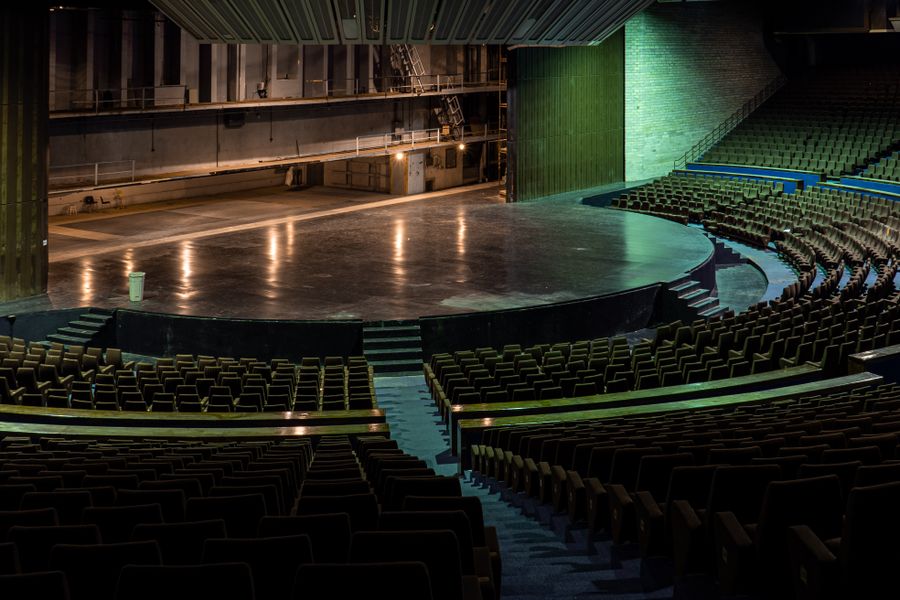
Theatrical live broadcast is the real-time transmission of a stage performance to remote audiences by television, cinema relay or online stream. Its history runs from early stage…
C&T’s Networked Theatre is a UK applied-theatre practice that combines drama, learning and digital media so that teachers and students can collaborate on shared creative projects online.…
Researching provenance means establishing, as far as the evidence allows, where a cross-cultural performance technique came from, how it travelled, who transmitted it, and what may responsibly…
Research a short-lived or defunct theatre collective by building a source map, establishing a documented chronology, reconstructing credits and reading self-documentation alongside press, venue, funder and oral-history…
Diaspora and migrant theatre describe overlapping but distinct forms of performance shaped by movement, settlement and cross-border belonging. Their histories are inseparable from international touring circuits, translation…
Theatre archives preserve the documentary residue of performance—programmes, prompt books, designs, photographs, contracts and press reviews—but not the live event itself. The gaps are shaped by who…
Site-specific and immersive theatre are related performance forms that place audiences inside designed or found environments. Site-specific work is made for a particular place, while immersive work…
Theatre and cultural exchange is the study and practice of how performance moves across cultural boundaries and is transformed in the process. It ranges from early modern…
To reconstruct a production history, define the production precisely, then triangulate programmes, reviews and archival production documents. Programmes supply credits, dates, venues and production context; reviews supply…